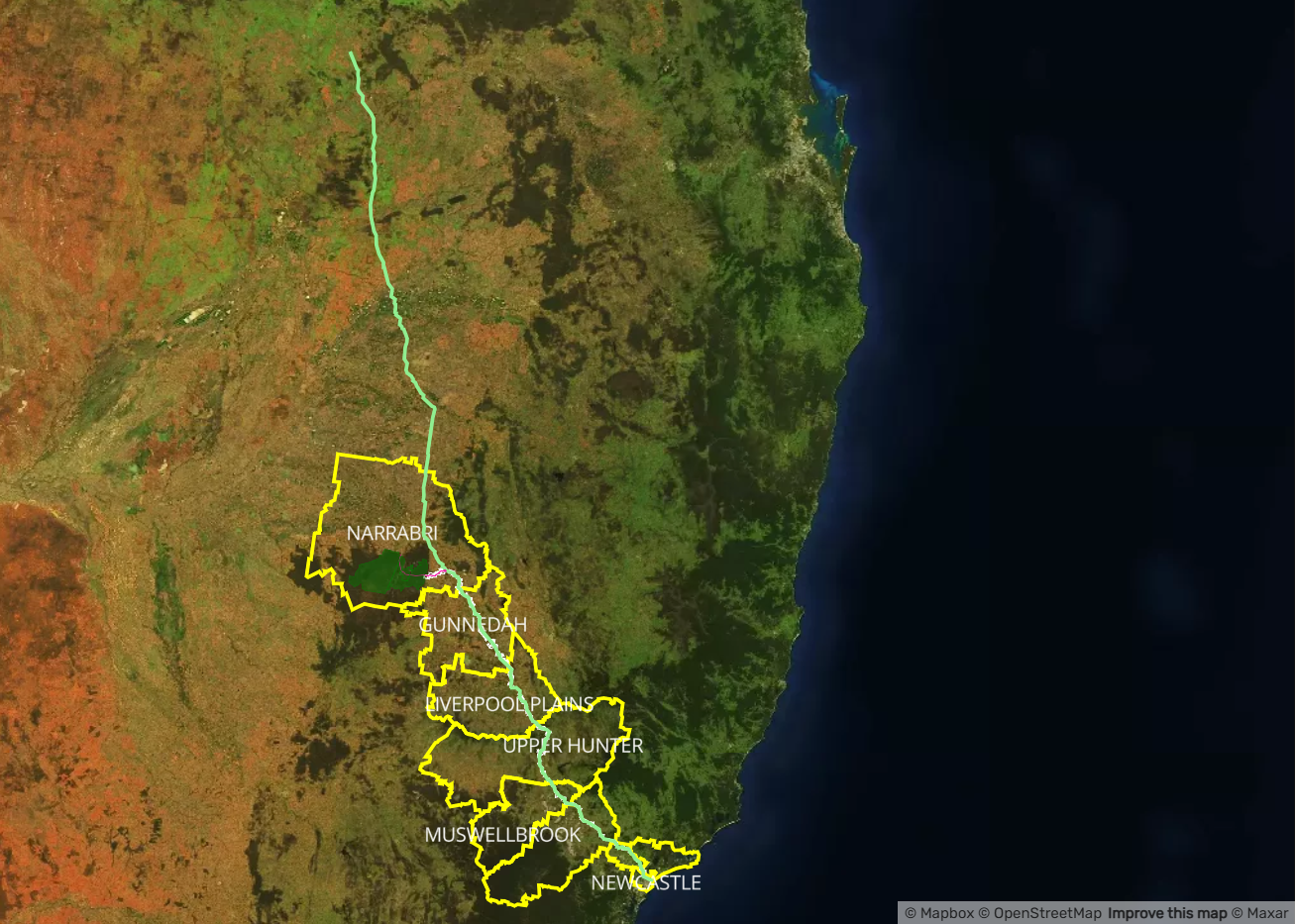
The Hunter Gas Pipeline
What Affected Landowners Need to Know About Compulsory Acquisition in NSW
If your property lies along the proposed Hunter Gas Pipeline corridor, you may have already received correspondence about land access, easement negotiations, or acquisition. For many rural and regional landholders, this is their first encounter with the compulsory acquisition process, and it can feel like the odds are stacked in favour of the acquiring party. They don't have to be. Understanding the project, the legal framework, and your entitlements to compensation is the first step toward achieving a just outcome.
About the Hunter Gas Pipeline
The Hunter Gas Pipeline is a proposed underground high-pressure gas transmission pipeline running approximately 833 kilometres from Wallumbilla in Queensland to Newcastle in New South Wales. The NSW section of the route crosses the border near Boggabilla and traverses some of the state's most productive agricultural country through the Moree Plains, Narrabri, Gunnedah and the Upper Hunter before terminating near Newcastle.
The project was originally approved in 2009 and was acquired by Santos in 2022, with the pipeline intended to connect the Narrabri Gas Project to the east coast gas market. For landowners along the corridor, the practical effect is the same regardless of who owns the project: the pipeline requires a permanent easement over private land, together with temporary construction access, laydown areas and ancillary works.
A pipeline easement is not a trivial imposition. Typical easement widths of 20 to 30 metres (with wider construction corridors) can bisect paddocks, interfere with irrigation layouts and cropping programs, restrict deep ripping and future development, and impose ongoing access rights in favour of the pipeline operator permanently.
The Legal Framework: How Acquisition Works in NSW
Gas pipeline proponents in NSW who hold a pipeline licence under the Pipelines Act 1967 (NSW) have the power to compulsorily acquire easements where agreement cannot be reached. Critically, compensation for any such acquisition is assessed under the Land Acquisition (Just Terms Compensation) Act 1991 (NSW) the "Just Terms Act" the same legislation that governs acquisitions by Transport for NSW, Sydney Water and other government authorities.
The process generally unfolds in stages:
1. Negotiation. The acquiring party must genuinely attempt to acquire the easement by agreement the Just Terms Act requires a minimum period of genuine negotiation before compulsory processes can commence. This is where many landowners are at their most vulnerable: early offers are frequently framed as generous, but without independent valuation advice it is impossible to know whether an offer properly reflects the impact on your land. From this stage onwards the acquiring authority must pay reasonable costs associated with valuations or legal advice.
2. Proposed Acquisition Notice (PAN). If agreement is not reached, the acquiring party may issue a PAN, giving formal notice of its intention to compulsorily acquire the easement, typically with a minimum 90-day period before acquisition.
3. Acquisition and determination of compensation. Upon gazettal, the easement vests in the acquiring party. The Valuer General then determines the compensation payable, and the landowner receives an offer based on that determination.
4. Objection rights. If you are dissatisfied with the compensation determined, you have 90 days to lodge an objection with the Land and Environment Court of NSW, where compensation is assessed afresh.
What Compensation Are You Entitled To?
Section 55 of the Just Terms Act sets out the heads of compensation. For a pipeline easement, the most significant are usually:
Market value the value of the land that the acquisition has taken.
Special value any additional value the land has to you beyond its market value, by reason of your particular use of it.
Severance where the easement reduces the value of your remaining land by severing it from other land you own, or by fragmenting the practical operation of your holding.
Disturbance under section 59, your reasonable costs flowing from the acquisition, including legal fees, valuation fees, and financial losses connected with your actual use of the land. Importantly, this means your reasonable costs of obtaining independent valuation and legal advice are generally recoverable from the acquiring party.
Relocation non-financial disadvantage resulting from the necessity to move the principal place of residence.
Increase or decrease in the rest of the land the reduction in value of the balance of your property caused by the pipeline's presence and the exercise of the easement rights: restrictions on use, interference with farming operations, and impacts on future development potential or highest and best use.
The correct assessment of these heads on rural properties is genuinely complex. Pipeline easements interact with soil types, carrying capacity, irrigation infrastructure, cropping rotations, subdivision potential and future land use in ways that a standardised, per-hectare offer rarely captures.
Why Independent Advice Matters
Acquiring parties engage experienced valuers, land access teams and lawyers as a matter of course. Landowners who negotiate without equivalent expertise are at a structural disadvantage and because reasonable professional costs are typically recoverable as disturbance, there is rarely a good reason to go it alone.
An independent valuer experienced in compulsory acquisition can:
Review and critique the acquiring party's offer and supporting valuation
Prepare an independent assessment of compensation across all heads under the Just Terms Act
Identify severance and injurious affection impacts that standard offers overlook
Support your legal team through negotiation, and act as an expert witness if the matter proceeds to the Land and Environment Court
Most importantly, compulsory acquisition compensation, even for “market value” may not be the straight assessment of land as if you were to sell it on the open market. Allowances within the act mean that you may be entitled to additional compensation within market value where certain factors are at play, such as the requirement to disregard the public purpose when assessing market value.
Talk to Sovereign Valuations
Sovereign Valuations' NSW/ACT team has deep experience in compulsory acquisition and infrastructure easement matters, including linear infrastructure and renewable energy projects across regional NSW. We also have good experience in metro and suburban locations and asset types. Our valuers are Certified Practising Valuers and members of the Australian Property Institute, with extensive experience preparing expert evidence.
If you have received correspondence regarding the Hunter Gas Pipeline whether an initial land access request, an easement offer, or a Proposed Acquisition Notice we encourage you to seek advice early. Early engagement gives you the strongest negotiating position and ensures impacts on your property are properly documented from the outset.
Contact Sovereign Valuations today for a confidential, no-obligation discussion about your property and your entitlements.
This article provides general information only and does not constitute legal or valuation advice. Landowners should obtain advice specific to their circumstances.